| Railway Books, Steam Train Books from Irwell Press |  |
Welcome to Irwell PressWe distribute a wide range of high quality railway books, from those covering the main lines of Britains railway network to highly detailed locomotive histories. | | ANNOUNCEMENTDear customers: after four decades of publishing, it is finally time to close the door on Irwell Press. The Directors, staggering into their dotage, have at last faced up to the march of time and will formally retire during April 2023. We have given it much thought and the time now feels right. We would like to thank all our customers for their support over the years; it has been greatly appreciated.All orders placed up to 31st.March 2023 via our website or phone will be fulfilled by Irwell Press.The good news is that Kevin Derrick at Strathwood Publishing (who has been selling Irwell Press books for a number of years and shares the same warehouse & distribution facilities) is taking all our 'in stock' books - these can be ordered through his website https://strathwood.co.uk or by ringing 01234 328792.A few Irwell titles currently in preparation have also been taken over by Strathwood and George Reeve will assist Kevin in their production and distribution, thereby maintaining the recognised style, formats and quality of reproduction associated with both publishers.Please note that neither our trading name nor the business is being sold.Kind regards, George, Chris and Wendy at Irwell Press. |
| | Recent new releases from Irwell Press! |
| | | | | OVERSEAS POST & PACKING: First the BAD NEWS...recent new worldwide customs regulations plus the increase in postal charges have made it very difficult to actually sell to customers in European countries and some countries elsewhere.. Therefore our ordering system will prevent you from placing an order. Now the GOOD NEWS.. we still allow customers in Australia, New Zealand, Canada and the USA to place orders. However, post COVID-19, the cost of "shipping" to those countries is constantly changing, sometimes on a daily basis. This is why we now can't use a fixed "shipping" charge like we used to. Instead we work it out on the day we dispatch. So please place your order but ignore the post & packing calculation! We will then contact you to sort it out :-) |
| | ..Meanwhile.. have fun, but STAY SAFE AND DON'T GIVE THE COVID19 BUG CHANCE TO BITE!! :-DBest wishes, George ReeveWebsite last updated for Irwell Press on 26/10/2023 by Ian King, webmaster, wolvertonrail.com, Britain's leading video retailer since 1987 with over 4500 DVDs available! This website is hosted by Advance Micro Computers Ltd. |
| LSWRInterested in the London and South Western Railway? Visit the LONDON SOUTH WESTERN CIRCLE. Plus join our Twitter feed here and take part in discussion on both the prototype and modelling issues. |
|
New Books from Irwell PressA Celebration of BR Standard 9F 2-10-0s 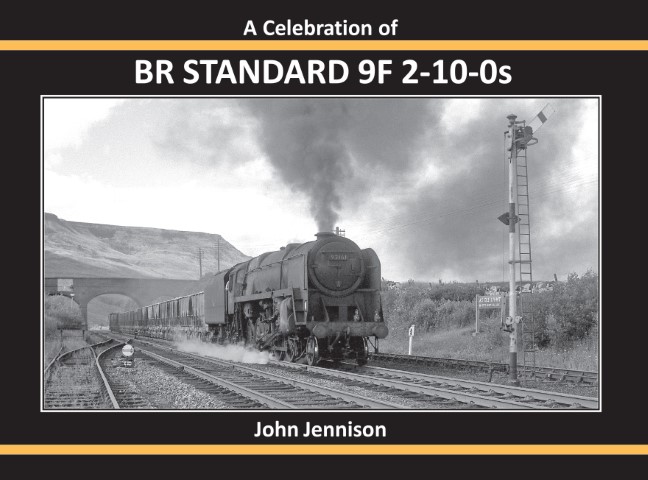 £28.95
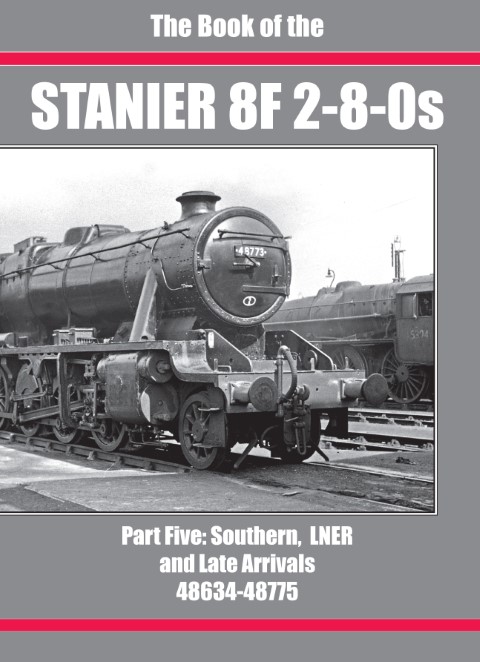
This is the sixth in a series which has but one simple aim, that is to use top quality photographs reproduced at the largest possible size to celebrate some of the best-loved steam classes. Full-page shots are presented in a landscape format and are backed up by detailed captions. The pictures have been selected from the collections of Rail-Online and Brian Stephenson’s Rail Archive Stephenson. After an inauspicious start on the Western Region, the 9F 2-10-0s came to be regarded as one of the best designs to run in Britain – fittingly for the last main line steam engines built by British Railways and celebrated by the naming of the very last one, EVENING STAR. They accounted for a quarter of all the BR Standard engines but unfortunately came much too late in the day with an average service life of less than ten years. The 9Fs were divided between the Western, London Midland and Eastern Regions with ten specially modified ones provided for the North Eastern Region. The emphasis throughout the book is on the engines in service and, apart from the first two sections which cover their introduction and principal developments including the ill-fated experiment with Crosti boilers, the book has been arranged in chapters showing the engines at work over the principal routes where they were used. The 9Fs both looked and were impressive and unlike most freight classes, they attracted the attention of railway photographers who captured some superb pictures of them. These included the famous ‘Windcutters’ on the former Great Central between Annesley and Woodford Halse, the Tyne Dock-Consett iron ore trains and the Long Meg-Widnes anhydrite hopper trains over the Settle & Carlisle – even summer Saturday relief passenger trains, including the finale of through workings over the Somerset & Dorset. find out more | | Working on Bulleid Pacifics 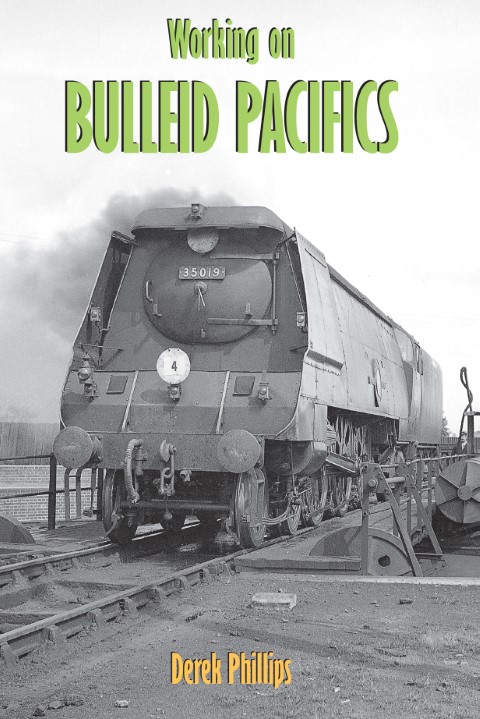 £28.95 The author spent the best years of his working life at Yeovil Town engine shed, cleaning and labouring at first and then as fireman on goods and passenger trains to Exeter, Salisbury and Weymouth. The acme of engine working to him was a Bulleid Pacific and a fascination and wonder began in the days when ‘dieselisation’ and ‘electrification’ were just bad things that might never happen. Sadly they did but a love affair with the engines continued through life into retirement. Along with his own reminiscences, Derek has brought together the antics and adventures of a dozen or so mates and colleagues, all of them similarly enamoured of these magnificent and enigmatic locomotives, both in their original form and as rebuilt by British Railways. There is much on Derek’s stamping grounds in the West of England but Bulleids are also portrayed from every depot, Devon to Kent, from which they worked. Over a hundred photographs show them (well more or less!) in every conceivable mode of operation. find out more | | The Book of the Stanier 8F 2-8-0s Part 5: Southern, LNER and Late Arrivals.48634-48775 £34.95 Completes the series Southern, LNER and Late Arrivals 48634-48775 Concluding volume in the longstanding 'Book of' series, in FIVE PARTS to adequately cover the vast number of locomotives involved. In this fifth part are the rest of the locomotives turned out by the Southern and the LNER, together with the curious 'Late Arrivals'rescued as wrecks from the Sands of the Nile and taken on by BR, as late as 1957. The Story So Far: - Part 1: Pre-War Engines 48000-48125
- Part 2: Wartime Engines 48126-48297
- Part 3: Crewe to Swindon via Horwich 48301-48439
- Part 4: Swindon, the LNER and the Southern 48440-48633
- Part 5: Southern LNER and Late Arrivals 48634-48775
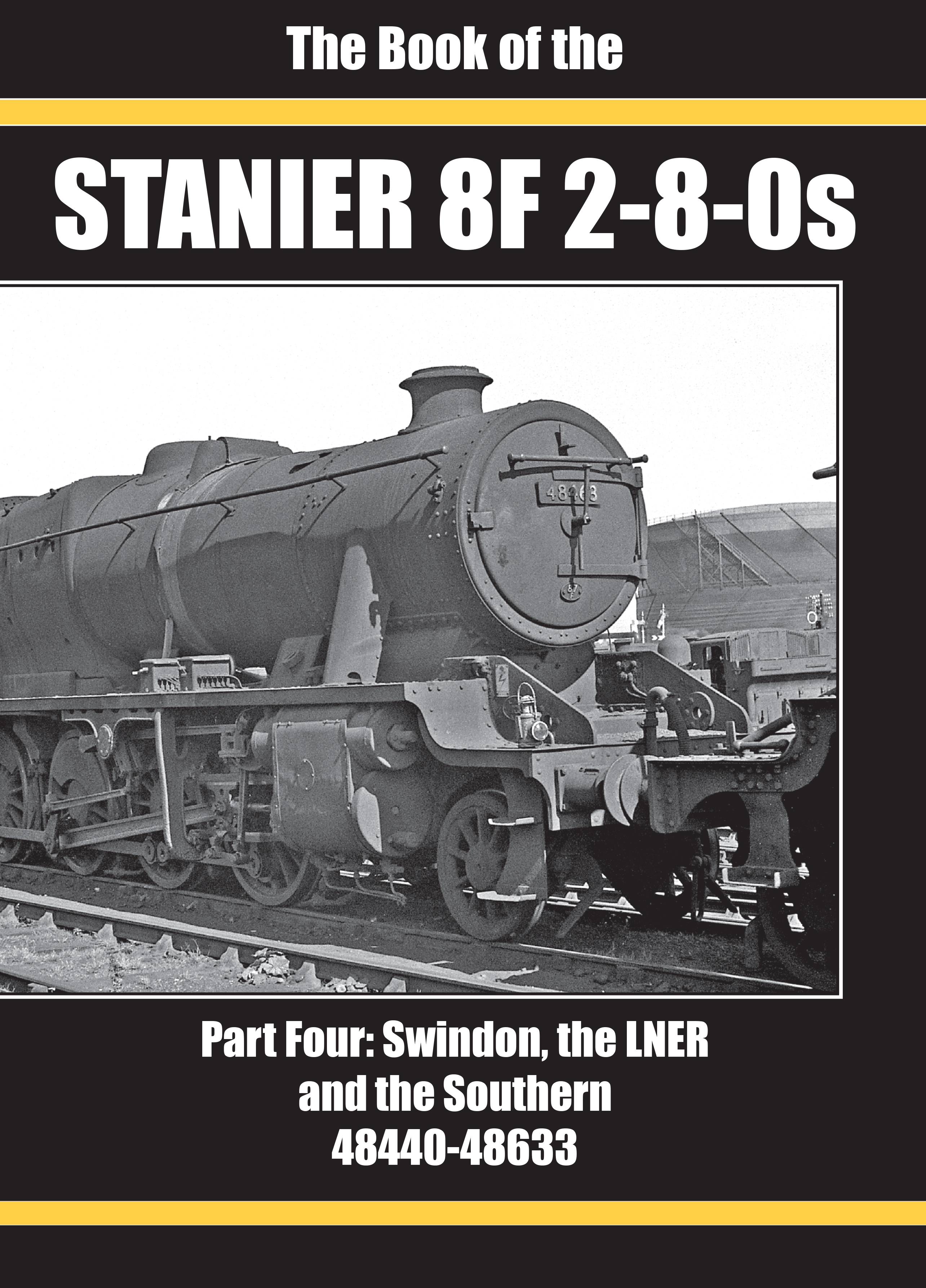
All the usual works histories and allocations are here for every loco; liveries and tender varieties, experimental episodes and every other facet of these mightily impressive 2-8-0s, which survived to the very last days of BR steam. find out more | | The Joy of the Jinties: The 3F 0-6-0Ts of the LMS and BR, 1924-1967 Part 3: 47460-47579 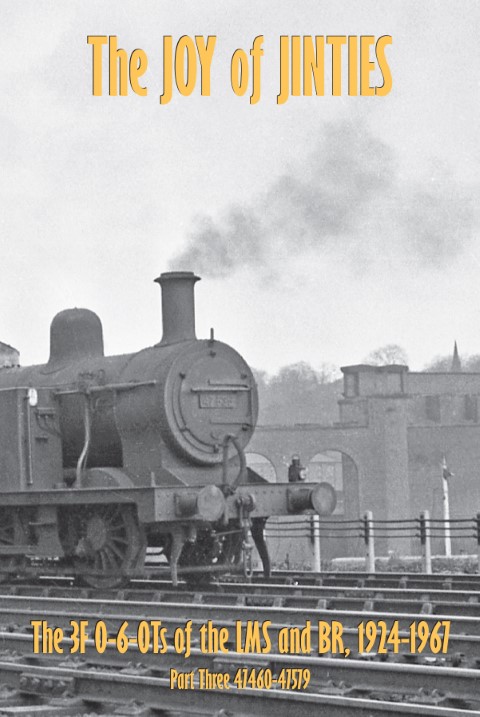 £21.95 The well known LMS 'Jinty' 0-6-0Ts originally known as the 'standard shunting tanks' came to number over 400, built over the years 1924-1931. The origin of the name is subject to various theories but in effect is lost in antiquity. The Tri-ang model of a Jinty, the famous 47606, was one of the best selling OO scale toy/models of all time and was often the first engine encountered by small boys who went on to enthuse over locomotives and railways for the rest of their lives. The new Jinties flooded across the LMS and through to the middle 1960s could be found labouring daily the length of the land; pilots at the great stations, from Euston to New Street to Preston to Carlisle, and or pottering in remote sidings. There was an endless variety of trip workings and local freights, ambling the length of a branch or collecting and delivering wagons to a series of outlying yards. A particular sphere of working the Jinties made their own was the transfer freight, a Victorian mode of working lasting effectively to the end of steam. Every city abounded in the work, from London to Glasgow, with Carlisle being a particularly glorious, example. They long survived the onset of diesel shunters and were only finally extinguished in 1967. Lest the Jinty be remembered only as a ’shunter’ it can be noted that plenty of passenger work came their way at first. Easily the most remarkable was their employment on GN suburban workings including the main line, cheek by jowl with racing Gresley Pacifics. A Jinty truly was a Joy. find out more | | The Joy of the Jinties: The 3F 0-6-0Ts of the LMS and BR, 1924-1967 Part 2: 47340-47459 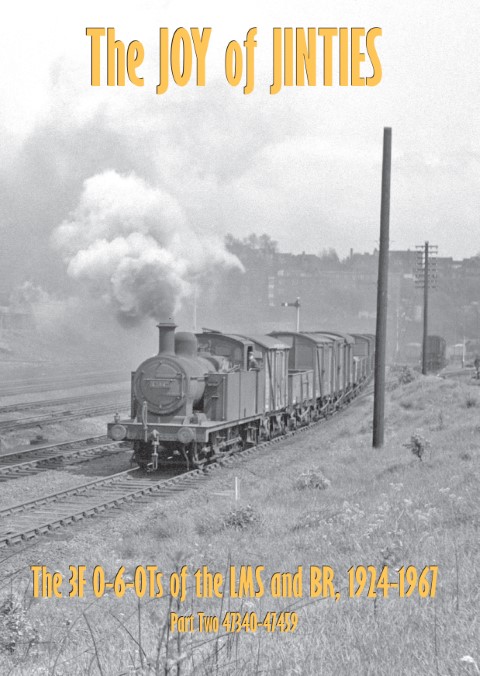 £21.95 The well known LMS 'Jinty' 0-6-0Ts originally known as the 'standard shunting tanks' came to number over 400, built over the years 1924-1931. The origin of the name is subject to various theories but in effect is lost in antiquity. The Tri-ang model of a Jinty, the famous 47606, was one of the best selling OO scale toy/models of all time and was often the first engine encountered by small boys who went on to enthuse over locomotives and railways for the rest of their lives. The new Jinties flooded across the LMS and through to the middle 1960s could be found labouring daily the length of the land; pilots at the great stations, from Euston to New Street to Preston to Carlisle, and or pottering in remote sidings. There was an endless variety of trip workings and local freights, ambling the length of a branch or collecting and delivering wagons to a series of outlying yards. A particular sphere of working the Jinties made their own was the transfer freight, a Victorian mode of working lasting effectively to the end of steam. Every city abounded in the work, from London to Glasgow, with Carlisle being a particularly glorious, example. They long survived the onset of diesel shunters and were only finally extinguished in 1967. Lest the Jinty be remembered only as a ’shunter’ it can be noted that plenty of passenger work came their way at first. Easily the most remarkable was their employment on GN suburban workings including the main line, cheek by jowl with racing Gresley Pacifics. A Jinty truly was a Joy. find out more | | Diesel Dawn 7: Western Region 0-6-0s D9500-D9555 (The "Teddy" Bears) £12.99 These locomotives enjoyed striking 'continental' good looks with, strangely, more than a nod to preceding steam design; for this they were regarded fondly by enthusiasts and they earned the somewhat fanciful and inexplicable nickname 'Teddy Bears'. Sadly, performance did not match these fond feelings and as well as proving disappointing technically, the steam age duties for which they were designed were, to BR's consternation, rapidly disappearing. British Railways sold them off after a few years but despite such an unprepossessing, and some might say, gnominious career nevertheless many saw many years of work in private industry including, famously, the Channel Tunnel. Remarkably, over a third of the class passed into preservation, an unprecedented proportion and paradoxically they can now be found at work, daily, the length and breadth of the country. find out more | | Main Line to The South - Part 2: St.Cross (Winchester) to Eastleigh and Swaythling 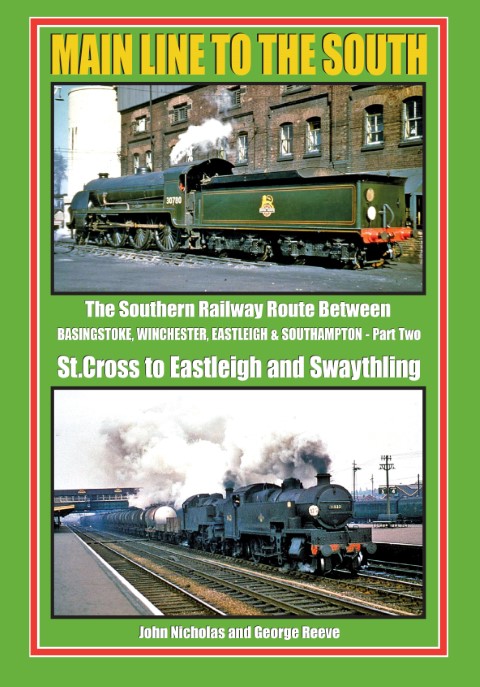 £34.95 The London and Southampton Railway opened its line in 1840, the first major railway in the south of England – soon to become the London & South Western Railway and eventually in 1923 the Southern Railway. Part 1 was concerned with the line from Basingstoke to Winchester. Continuing our jornney, Part Two describes the line through to Eastleigh and beyond to Swathling. Once again, we cover in great detail all facets of the construction, opening and operation of the line over the many decades with our usual extensive use of maps, plans and diagrams. Every archive, contemporary account or historical description has been thoroughly investigated in depth and presented as part of the narrative. A central pillar of Part Two is inevitably the great and continuingly important operating centre at Eastleigh, including the Carriage and Wagon Works, the Locomotive Works and the vast locomotive running shed. The line gathered frenzied interest in the 1960s as the last steam-worked main line in England until its electrification in July 1967. Today the line between Basingstoke and Southampton carries not only heavy passenger traffic but, with the demise of coal traffic elsewhere, some of the nation’s heaviest freight traffic, in the shape of containers from Southampton Docks. Part Three will complete the story to Southampton itself; the stations at Terminus and Central. find out more | | A Celebration of LNER Gresley A4 Pacifics 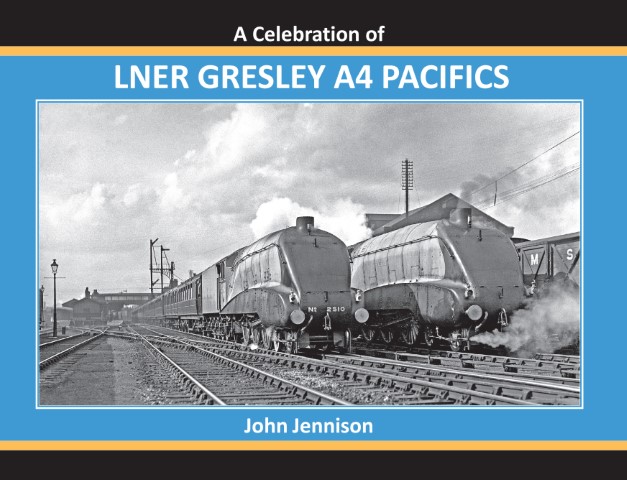 £28.95 The fifth in a series with the simple old fashioned aim to showcase top quality photographs reproduced at the largest possible size, in order to celebrate some of the best-loved steam classes. Full-page shots are presented in a landscape format and come with comprehensive captions. The emphasis throughout is on the engines in service and the book has been arranged in chapters in chronological order starting with the batches of the class as built. The final five chapters show the engines at work from 1935 onwards on the principal routes where they were used. All engines in the class are covered at least once. When the LNER decided to introduce a high-speed service between London and Newcastle, the public had no inkling of what would appear in September 1935. More engines were built for additional streamlined services and also for general express work, but they will always be noted for their high-speed exploits culminating in MALLARD’s world record in 1938. After the Second World War, the A4s took some years to regain at least some of their pre-war brilliance, but they enjoyed a final few years at the top after they were all fitted with Kylchap double chimneys in the late 1950s. They even had a final fling in Scotland working expresses between Glasgow and Aberdeen from 1964 until 1966. The pictures have been selected mainly from Brian Stephenson’s Rail Archive Stephenson with the remainder from Rail-Online. find out more | | Diesel Dawn 5: Chasing Diesels 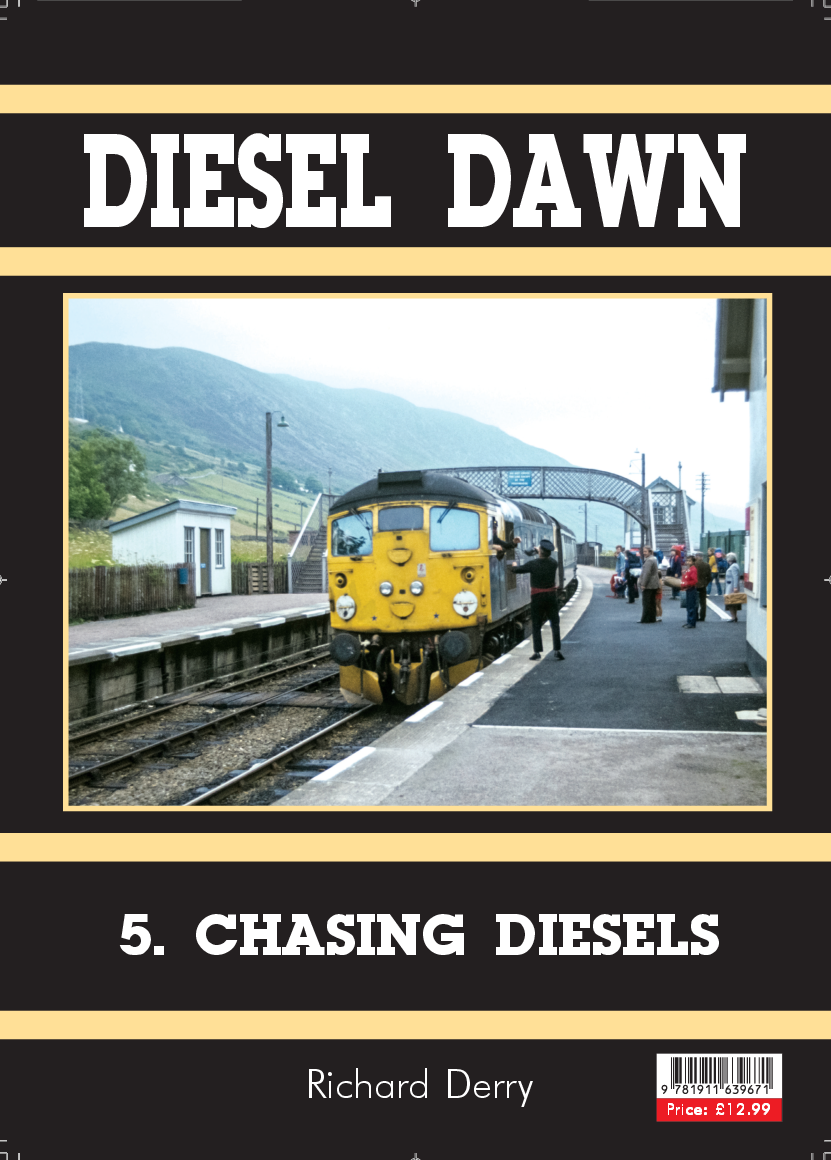 £12.99 Increasing affluence and a second-hand car allowed the author a geographical range previously denied to him and with various pals he embarked in the 1970s and 1980s on a number of expeditions to various parts of the country, to photograph diesel locomotives, then still running in abundant numbers and variety. There were busy main line centres to be explored – York, Doncaster, Crewe and the rest but also obscure corners that could only be found by recourse to maps, sometimes inquiring of locals with barely understandable dialects, something after the fashion of Victorian explorers. Nowadays there are very few locomotives at work in this country and computer apps enable anyone to locate their whereabouts as easily as those actually responsible for operating them – something of course unimaginable back in the 1970s. Back then there were still considerable numbers of locomotives working major traffic flows across the country – most notably coal and steel – on a scale undreamed of today. Diesel locomotives on freight traffic ran more often than not at night so had to be tracked down in their daytime lairs, at depots often located in out of the way places. hen there was the problem of entry which could normally be negotiated with sympathetic staff in an age less concerned with health & safety, legal liabilities, terrorism and the like. There follows a tale of chasing what was then a huge variety of locomotive types in unsung, unknown corners of the kingdom, bump-starting successive wheezing cars, unsavoury B&B establishments and the more benign forms of trespass. A rollicking tale of an altogether more innocent railway age. find out more | | The Book of the Stanier 8F 2-8-0s Part 4: Swindon, the LNER and the Southern 48440-48633 £30.95 Latest in the longstanding ‘Book Of’ series, in FIVE PARTS to adequately cover the vast number of locomotives involved. In this fourth part are the rest of the locomotives turned out by the Great Western at Swindon and those appearing from the Southern and the LNER. The Story So Far: - Part 1: Pre-War Engines 48000-48125
- Part 2: Wartime Engines 48126-48297
- Part 3: Crewe to Swindon via Horwich 48301-48439
- Part 4: Swindon, the LNER and the Southern 48440-48633
- Part 5: Southern LNER and Late Arrivals 48634-48775
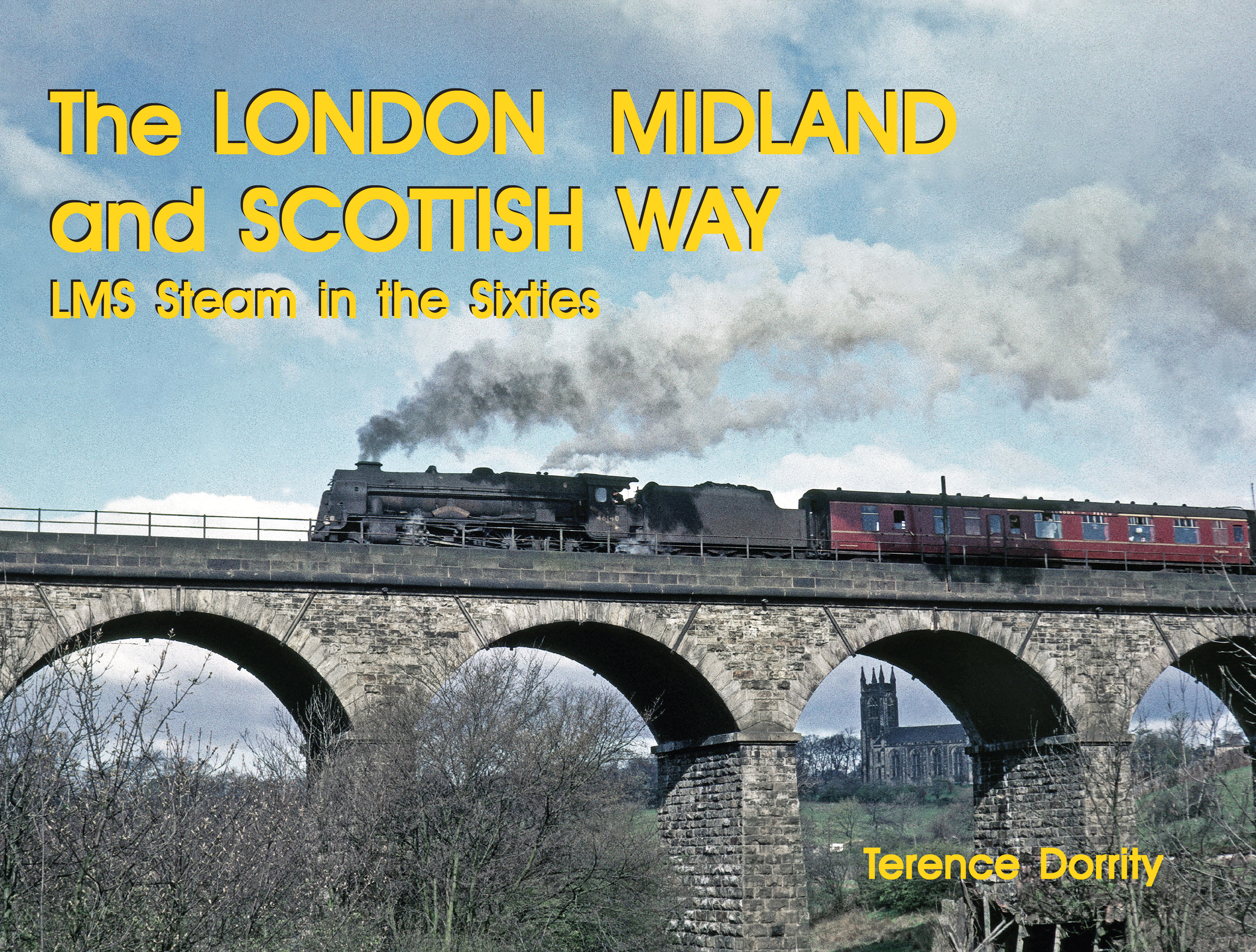
All the usual works histories and allocations are here for every loco; liveries and tender varieties, experimental episodes and every other facet of these mightily impressive 2-8-0s, which survived to the very last days of BR steam. find out more | | The Joy of the Jinties: The 3F 0-6-0Ts of the LMS and BR, 1924-1967 Part 1: 47260-47339 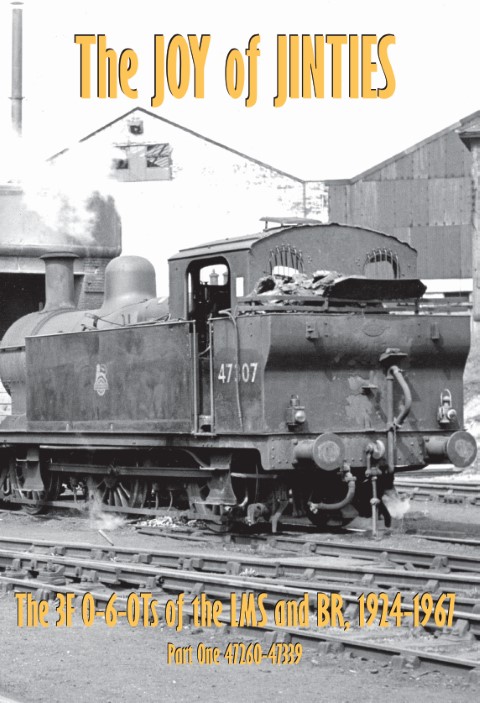 £19.95 The well known LMS 'Jinty' 0-6-0Ts originally known as the 'standard shunting tanks' came to number over 400, built over the years 1924-1931. The origin of the name is subject to various theories but in effect is lost in antiquity. The Tri-ang model of a Jinty, the famous 47606, was one of the best selling OO scale toy/models of all time and was often the first engine encountered by small boys who went on to enthuse over locomotives and railways for the rest of their lives. The new Jinties flooded across the LMS and through to the middle 1960s could be found labouring daily the length of the land; pilots at the great stations, from Euston to New Street to Preston to Carlisle, and or pottering in remote sidings. There was an endless variety of trip workings and local freights, ambling the length of a branch or collecting and delivering wagons to a series of outlying yards. A particular sphere of working the Jinties made their own was the transfer freight, a Victorian mode of working lasting effectively to the end of steam. Every city abounded in the work, from London to Glasgow, with Carlisle being a particularly glorious, example. They long survived the onset of diesel shunters and were only finally extinguished in 1967. Lest the Jinty be remembered only as a ’shunter’ it can be noted that plenty of passenger work came their way at first. Easily the most remarkable was their employment on GN suburban workings including the main line, cheek by jowl with racing Gresley Pacifics. A Jinty truly was a Joy. find out more | | London Midland and Scottish Way - LMS Steam in the Sixties £26.95
The mainly full-page colour photographs of ex LMS locomotives in the ‘London Midland and Scottish Way’ were taken by Terence Dorrity between 1960 and the very last day of British Railways main line steam; the ‘Fifteen Guinea Special’ on 11 August 1968. Locations range from London to Carlisle in England, into Scotland and Wales and over to Northern Ireland. Contents: - Express and Local Passenger Trains
- Light Engine, Parcels and Permanent Way Trains
- Delivering the Goods
- Tender Locomotives on Shed
- Tank Engines
- Excursion Trains and Enthusiast Specials
- Irish Interlude
- Early Preservation
The third in a series; previous volumes are: - Way Down South
- Western Way
find out more | | The Somerset & Dorset Railway - Bath to Bournemouth 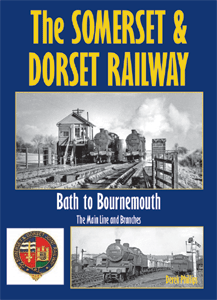 £35.95 The Main Line & Branches. If ever a line could be called an evergreen favourite it is the Somerset & Dorset, so quintessentially English in its achingly beautiful settings, its charming stations and the blasting hill climbing efforts of its steam locomotives. All of it unsullied by diesels right up to its final demise in 1966. It was a line like no other, by turns a dozing branch, by turns a main line with double headed named expresses running the length of the country. It is no wonder that so many volumes have been devoted to it though it has probably never been covered photographically to this extent, in the detail of its buildings and track – getting on for 600 photographs reveal the intricacies and grandeur of the line as never before, together with finely drawn diagrams of every station, yard and junction. The author worked on the footplate on the Southern Region in the South West and the S&D has been close to his heart ever since. The plans are an especially useful feature: ‘Up’ is Broadstone to Bath and Evercreech Junction to Highbridge, ‘Down’ is Bath to Broadstone and Highbridge to Evercreech Junction. Pause for breath... ‘Down’ S&D trains from Broadstone to Bournemouth became ‘Up’ trains on the Southern. S&D trains were ‘Down’ leaving Bournemouth West until reaching Broadstone upon which they became ‘Up’ on joining the S&D! As we say, it was a line like no other! find out more | | T.E. WILLIAMS: The Lost Colour Collection Volume 4 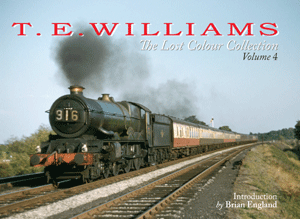 £25.95
This concluding volume in the series casts an even wider net across Tom Williams' unique body of colour work captured between 1954 and 1964. Predictably, there are the inevitable shots of Kings attacking Hatton Bank, Tom's favourite local vantage point, plus a variety of other favoured locations throughout the counties surrounding his native Warwickshire, but there are also windows into his travels far and wide. Visits, for example, to the ex-Somerset & Dorset Joint Railway, the East Coast Main Line and of course, the seductive but challenging contours of North Devon. A proportion of the most iconic images included have been selected, not just for their documentary, historic importance, but also for their intrinsic artistic qualities: many evoking a tangible sense of 'being there'. Nevertheless, as with the previous volumes, the emphasis remains firmly on presenting detailed, high quality full-page colour plates, accompanied by as much comprehensive supporting information as possible. find out more | | The Book of the Stanier Three Cylinder 2-6-4Ts 42500-42536 £29.95 The LMS employed innumerable 2-6-4Ts, evolving from parallel boiler Fowler engines through updated Stanier taper boiler versions through to Fairburn’s final development. Between them they amounted to over 600 in total. The first Stanier engines were wholly different in having three cylinders; moreover they were (most unusually) restricted to one particular stretch of line. Apart from the war years when they were all temporarily transferred away, they could always be found working passenger services over the former London Tilbury & Southend system from Fenchurch Street to Southend and Shoeburyness, until ousted by electrification in 1962. As the information board alongside the preserved 2500 in the National Railway Museum at York pronounces: ‘Possibly the finest suburban tank engines that ran in this country’. find out more | | The Book of the Stanier 8F 2-8-0s Part 3: From Crewe to Swindon via Horwich 48301-48439 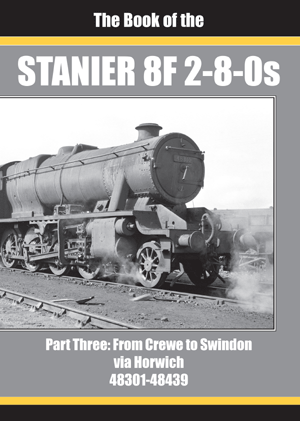 £30.95 ISBN 978-1-911262-39-8 Latest in the longstanding ‘Book Of’ series, in FIVE PARTS to adequately cover the vast number of locomotives involved. In this third part are the locomotives that formed the first tranche of the 8Fs as a British ‘War Locomotive’ built at various works to Government edict. As the title indicates and as might be expected, they were built by the LMS but the first Swindon examples also began to emerge, from 8400 onwards. Part One detailed those 8Fs built by/for the LMS for its own use – 8000-8125 in the 1930s with no thought then of them becoming a British ‘war locomotive’ though indeed some did go abroad. Part Two concerns firstly those engines built by Crewe and North British for the LMS, 8126-8225 which never went abroad and secondly the locos built at Ministry of Supply/War Department behest and loaned to the LMS/GWR, 8226-8297. The life, times and adventures of each (sometimes quite exotic in the case of the latter) is recorded under the individual loco, as with previous ‘Books Of’... find out more | | | | | |
|
|